- HOME
- Column Difference
Rubber Grinding Stone vs Conventional Grinding Wheel | Key Differences and Advantages
Differences Between Rubber Grinding Stones and Conventional Grinding Stones
Rubber grinding stones have no pores, resulting in minimal detached abrasive grains and swarf
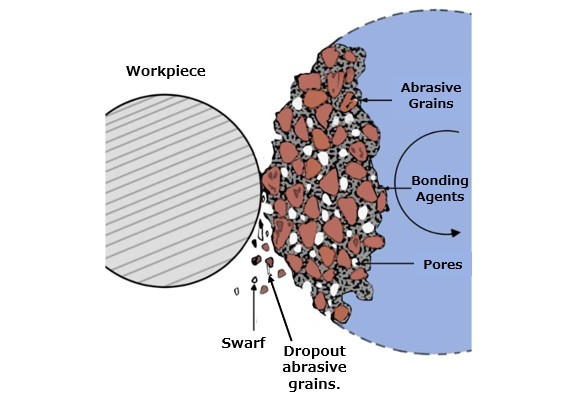
Conventional grinding stones (with pores)
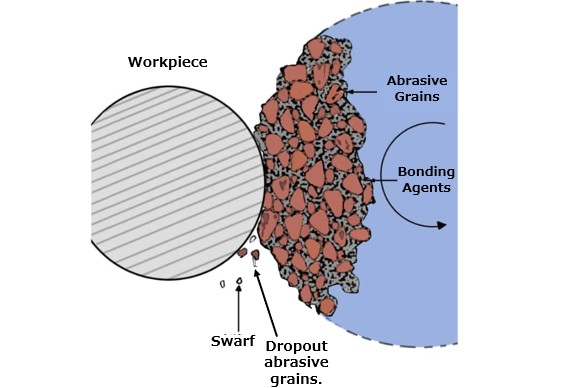
Rubber grinding stones (no pores)
Advantages of Rubber Grinding Stones
- Can be used on a wide range of materials, including hard-to-machine metals, high-hardness brittle materials, rubber, and resins.
- Can operate at low rotational speeds, generating less heat and reducing the load on the workpiece.
- Rubber elasticity reduces the likelihood of polishing scratches compared to resinoid or vitrified grinding wheels.
- Simultaneously achieves grinding and polishing, enabling process reduction.
- Resists clogging and typically requires no dressing.
- Provides uniform polishing due to rubber elasticity, minimizing polishing marks.
- Easy truing allows operators to quickly and freely adjust the grinding stone shape.
- Conforms well to the workpiece, reducing vibration and enabling precise work.
- Minimizes over-grinding and uneven work.
- The rubber bonding agent reduces dust generation from the grinding stone.
Comparison of Rubber and Conventional Grinding Stones
| Element | Conventional Grinding Stone | Rubber Grinding Stone |
|---|---|---|
| Abrasive grains | A, WA, C, GC, Ceramic, Diamond, etc. | |
| Bonding agent | Resinoid, Vitrified, Electroplated, Metal, etc. | Rubber |
| Pores | Yes | No (self-sharpening action removes swarf) |